New free tool Holiday spending money calculator
Skip to main content
What the Vatican Dress Code Requires

What the Vatican Dress Code Requires

Clothing

Going to St. Peter’s Square and then being sent away because of how you are dressed is probably one of the biggest mistakes tourists make going to the Vatican. Again, these requirements are listed on the Vatican’s own visitor information for the museums, so reading them would make dressing for your day here rather easy to follow.

The Vatican Museums Rule Itself

Both the Vatican Museums’ visitor information pages and the official website for Saint Peter’s Basilica set out the requirements for visitors’ clothing. It makes for very plain reading. As stated already on this site, visitors to the Vatican Museums must have their shoulders covered, be unable to reveal too much of their neck and backs and have shorts/trousers/skirts that come down to the knee. Hats are not permitted to be worn inside the Museums.

St Peter’s Basilica Entrance Rule

St. Peter’s Basilica: Same Dress Code for Basilica too! Just as the museums have their own rules for visitors, St. Peter’s Basilica has its own dress code for those who want to enter. In fact, the Basilica’s security checks are BEFORE the general security checks, so you could end up being sent back after having walked around the colonnade and then have to retrace your steps through the square, only to get back in line at the end of the security queue. This can mean losing up to an hour of your time on a very busy morning.

One Outfit That Works All Day

The simplest approach is to pick an outfit that covers you for both the clothing requirements of the Vatican Museum and St. Peter’s and for the hot weather in Rome. A midi dress or below-knee length trousers would cover up the knees. Then, a lightweight long-sleeve top or even a cardigan would be sufficient to cover up your shoulders for both places. A scarf would also be handy for a quick covering of your shoulders if you are wearing a sleeveless top.

What to wear | Why it works

Midi dress or below-knee trousers | Clears the knee rule at both the Museums and St Peter’s Lightweight long-sleeve top or cardigan | Covers shoulders, easy to remove in heat, packs small A plain scarf, folded flat. This can be used as a shoulder cover if your top is sleeveless. • Flat, closed shoes: The cobblestones of Rome’s streets, as well as the long walks of the Museums’ marble floors, demand considerable comfort from your footwear.

Carry Your Own Scarf
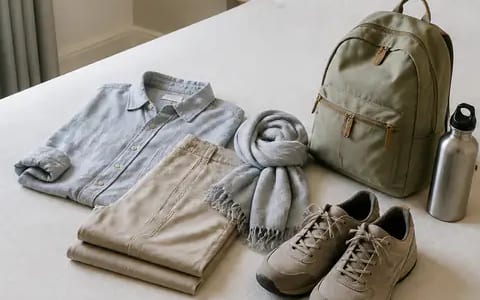
Folded beige trousers and a soft grey scarf, ready to cover knees and shoulders on a church visit

Vendors outside St. Peter’s Basinica sell the usual tourist scarf merchandise. They charge tourists big-time markups, and you can be sure you will be approached for sale as you walk up to the Basilica with the rest of the under-dressed tourists. But, bring a plain scarf to cover with from home. It costs nothing and gets you in without having to haggle with some street vendor and lose valuable time in the queue. If you are looking for vatican dress code, see https://travelsnews.co.uk/clothing/the-one-place-you-re-actually-told-to-wear-white/.

The Tattoo and Decorum Grey Area

There is no official ban on people with tattoos visiting the Vatican Museums, although they are asked to cover up distinctive signs. In reality, the dress code is focused on general modesty, not searching for tattoos. Dressing sensibly for St. Peter’s Basilica, including covering up large or prominent tattoos with a long sleeve, should be sufficient.

Rome’s Street Rules That Catch Tourists Out

Outside of the churches of Rome, there are lots of street rules which most tourists do not know about and they can catch you out big time! Currently there are bylaws regarding monument steps and fountains. You can get fined on the spot and taken away by the local police if you are sitting on the steps of a famous monument, such as the Spanish Steps or if you are wading or paddling in the fountains of famous landmarks such as the Trevi Fountain. This is not covered by the Vatican’s church dress code and you will get in trouble even if you have dressed modestly for your day at St Peter’s.

Myth-Check: What Tourists Assume vs What the Rules Say

Common assumption, What the Vatican’s own wording actually says "Leggings count as trousers" Not specified as trousers; a skirt or dress over them is the safer read of the knee rule. "An extended arm length of a shirt will be considered as a dress" – a common myth that could result in problems for tourists wearing long-sleeved tops. The rule actually states shorts and skirts that fall above the knee in excess of the length of the ankle. "Only women get checked" Rules apply to men and women equally; men in shorts above the knee are turned away too. "Only one ticket is required for both the Museum and St. Peter’s Basilica" The dress code check for entry to the Museum and St. Peter’s Basilica are at two separate entrances with two separate queues.

Quick Questions Answered

Children are allowed a bit more leeway, but very short shorts and exposing bare midriffs on older children may attract comment from staff at both sites. The Museums and St Peter’s are two separate sites with two separate entrances and two separate queues, and even if you pass for entry to the Museums you can still be turned away at the Basilica, and vice versa. UK Government travel advice to the Holy See notes that visitors should expect modest dress to be enforced at religious sites as part of local custom.

Common Mistakes to Avoid

Dressing modestly means shorts with knee-length or above covers will mean you will be turned away at the Vatican Museums and St. Peter’s Basilica as will people wearing sleeveless tops. Hats of any kind are not allowed to be worn within the Museum and Basilica. If your shoulders are bare it’s best to wear a scarf that you’ve brought with you – these are usually sold by street vendors outside St. Peter’s Basilica to tourists and are charged at inflated prices, plus you’ll save time by not having to haggle whilst others in your party are allowed to walk past you to get in. Even if you have visible tattoos, you’ll be fine as long as you cover up the rest of your body. Just be aware of the following: even though you’ve dressed correctly for the churches, you’ll still be subject to other Rome Street Rules that could mean you get fined for sitting on monument steps or for paddling in the fountains. For more information about where you have to wear white, see our article on the subject.

The Vatican dress code can be covered by one simple outfit that you pack before you go.
Dubai Visa Requirements for UK Visitors
Travel Rights

Dubai Visa Requirements for UK Visitors

Travellers with backpacks and wheeled suitcases walking past a bank of blue departures screens and check-in signs in a busy airport terminal
Package Holidays, Travel Rights

Package Holiday Regulations Explained: ATOL, ABTA and Your Rights When Things Go Wrong

Vaccinations You'll Need for Thailand
Tips

Vaccinations You’ll Need for Thailand

Getting an Emergency Passport Abroad
Package Holidays

Getting an Emergency Passport Abroad

How to Layer for a Long Haul Flight
Blog

How to Layer for a Long Haul Flight

What the Vatican Dress Code Requires

Clothing

Going to St. Peter’s Square and then being sent away because of how you are dressed is probably one of the biggest mistakes tourists make going to the Vatican. Again, these requirements are listed on the Vatican’s own visitor information for the museums, so reading them would make dressing for your day here rather easy to follow.

The Vatican Museums Rule Itself

Both the Vatican Museums’ visitor information pages and the official website for Saint Peter’s Basilica set out the requirements for visitors’ clothing. It makes for very plain reading. As stated already on this site, visitors to the Vatican Museums must have their shoulders covered, be unable to reveal too much of their neck and backs and have shorts/trousers/skirts that come down to the knee. Hats are not permitted to be worn inside the Museums.

St Peter’s Basilica Entrance Rule

St. Peter’s Basilica: Same Dress Code for Basilica too! Just as the museums have their own rules for visitors, St. Peter’s Basilica has its own dress code for those who want to enter. In fact, the Basilica’s security checks are BEFORE the general security checks, so you could end up being sent back after having walked around the colonnade and then have to retrace your steps through the square, only to get back in line at the end of the security queue. This can mean losing up to an hour of your time on a very busy morning.

One Outfit That Works All Day

The simplest approach is to pick an outfit that covers you for both the clothing requirements of the Vatican Museum and St. Peter’s and for the hot weather in Rome. A midi dress or below-knee length trousers would cover up the knees. Then, a lightweight long-sleeve top or even a cardigan would be sufficient to cover up your shoulders for both places. A scarf would also be handy for a quick covering of your shoulders if you are wearing a sleeveless top.

What to wear | Why it works

Midi dress or below-knee trousers | Clears the knee rule at both the Museums and St Peter’s Lightweight long-sleeve top or cardigan | Covers shoulders, easy to remove in heat, packs small A plain scarf, folded flat. This can be used as a shoulder cover if your top is sleeveless. • Flat, closed shoes: The cobblestones of Rome’s streets, as well as the long walks of the Museums’ marble floors, demand considerable comfort from your footwear.

Carry Your Own Scarf

Folded beige trousers and a soft grey scarf, ready to cover knees and shoulders on a church visit

Vendors outside St. Peter’s Basinica sell the usual tourist scarf merchandise. They charge tourists big-time markups, and you can be sure you will be approached for sale as you walk up to the Basilica with the rest of the under-dressed tourists. But, bring a plain scarf to cover with from home. It costs nothing and gets you in without having to haggle with some street vendor and lose valuable time in the queue. If you are looking for vatican dress code, see https://travelsnews.co.uk/clothing/the-one-place-you-re-actually-told-to-wear-white/.

The Tattoo and Decorum Grey Area

There is no official ban on people with tattoos visiting the Vatican Museums, although they are asked to cover up distinctive signs. In reality, the dress code is focused on general modesty, not searching for tattoos. Dressing sensibly for St. Peter’s Basilica, including covering up large or prominent tattoos with a long sleeve, should be sufficient.

Rome’s Street Rules That Catch Tourists Out

Outside of the churches of Rome, there are lots of street rules which most tourists do not know about and they can catch you out big time! Currently there are bylaws regarding monument steps and fountains. You can get fined on the spot and taken away by the local police if you are sitting on the steps of a famous monument, such as the Spanish Steps or if you are wading or paddling in the fountains of famous landmarks such as the Trevi Fountain. This is not covered by the Vatican’s church dress code and you will get in trouble even if you have dressed modestly for your day at St Peter’s.

Myth-Check: What Tourists Assume vs What the Rules Say

Common assumption, What the Vatican’s own wording actually says "Leggings count as trousers" Not specified as trousers; a skirt or dress over them is the safer read of the knee rule. "An extended arm length of a shirt will be considered as a dress" – a common myth that could result in problems for tourists wearing long-sleeved tops. The rule actually states shorts and skirts that fall above the knee in excess of the length of the ankle. "Only women get checked" Rules apply to men and women equally; men in shorts above the knee are turned away too. "Only one ticket is required for both the Museum and St. Peter’s Basilica" The dress code check for entry to the Museum and St. Peter’s Basilica are at two separate entrances with two separate queues.

Quick Questions Answered

Children are allowed a bit more leeway, but very short shorts and exposing bare midriffs on older children may attract comment from staff at both sites. The Museums and St Peter’s are two separate sites with two separate entrances and two separate queues, and even if you pass for entry to the Museums you can still be turned away at the Basilica, and vice versa. UK Government travel advice to the Holy See notes that visitors should expect modest dress to be enforced at religious sites as part of local custom.

Common Mistakes to Avoid

Dressing modestly means shorts with knee-length or above covers will mean you will be turned away at the Vatican Museums and St. Peter’s Basilica as will people wearing sleeveless tops. Hats of any kind are not allowed to be worn within the Museum and Basilica. If your shoulders are bare it’s best to wear a scarf that you’ve brought with you – these are usually sold by street vendors outside St. Peter’s Basilica to tourists and are charged at inflated prices, plus you’ll save time by not having to haggle whilst others in your party are allowed to walk past you to get in. Even if you have visible tattoos, you’ll be fine as long as you cover up the rest of your body. Just be aware of the following: even though you’ve dressed correctly for the churches, you’ll still be subject to other Rome Street Rules that could mean you get fined for sitting on monument steps or for paddling in the fountains. For more information about where you have to wear white, see our article on the subject.

The Vatican dress code can be covered by one simple outfit that you pack before you go.
Dubai Visa Requirements for UK Visitors

Dubai Visa Requirements for UK Visitors

Travellers with backpacks and wheeled suitcases walking past a bank of blue departures screens and check-in signs in a busy airport terminal

Package Holiday Regulations Explained: ATOL, ABTA and Your Rights When Things Go Wrong

Vaccinations You'll Need for Thailand

Vaccinations You’ll Need for Thailand

Getting an Emergency Passport Abroad

Getting an Emergency Passport Abroad

How to Layer for a Long Haul Flight

How to Layer for a Long Haul Flight