Cast your mind back to 2003. The ideal living room had a fuchsia feature wall, a frosted-glass coffee table, and enough scatter cushions to upholster a small aircraft. Your ideal wardrobe involved at least one item that was simultaneously a top, a skirt, and a belt. Everything was loud, maximalist, slightly too much – and it was perfect, because you were twenty-three and the future was a bright, ludicrous, open-plan space you could fill with anything.
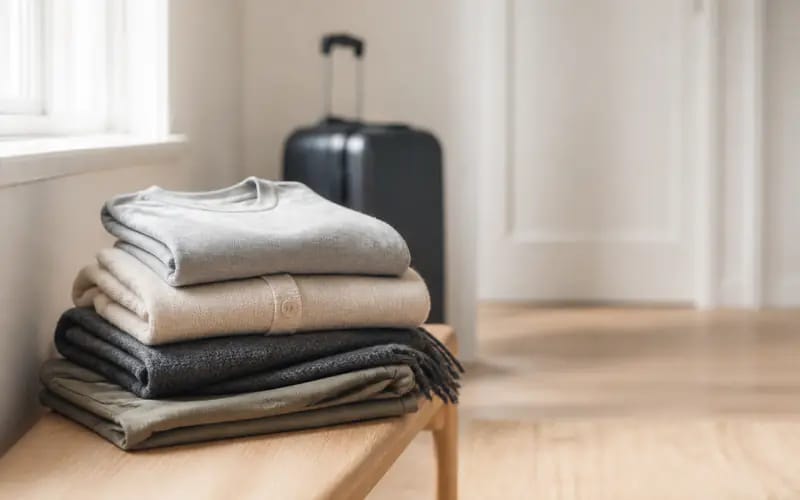
Now look around you. The room everyone wants in 2025 is linen-toned, spare, and contains exactly one beautiful lamp that looks as though it belonged to a mild-mannered professor in 1974. The wardrobe is camel, navy, ecru. Things are described as "considered". The highest compliment a sofa can receive is that it looks "inherited".
Something happened. But it wasn't taste.
The Seven-Year Itch (That Nobody Talks About)
Here is the strange thing about trend cycles: they run on roughly a seven-year rhythm. That is not a coincidence, and it is not really about fashion at all. It maps – almost unnervingly – onto the rhythm of a British life.

Early twenties: leaving home, renting, filling the flat with noise and colour because the future is abstract and exciting. Late twenties: forming a household, buying things that match, toning it down slightly. Thirties: children, or the decision not to have them, or the slow realisation that the life you planned looks quite different from the one you're actually in. Forties: parents ageing, money more complicated than you expected, the future feeling less like a room to fill and more like a thing you're managing.
The trend cycle does not lead that journey. It follows it.
Quiet Luxury Is Not a Vibe. It's a Feeling.
The dominant aesthetic of right now – "quiet luxury", "old money", the appetite for things that look worn-in and ancestral rather than newly bought – is not, when you look at it squarely, about clothes or interiors at all. It is the visual language of a generation processing middle age and its griefs: the slightly smaller expectations, the parents who are suddenly old, the sense that the bright maximalist future turned out to have some fairly serious small print.
When a generation reaches for muted palettes and things that look inherited, what it is reaching for is continuity – the suggestion of a past that was solid, a lineage that holds. You cannot buy that. But you can buy a very good cashmere jumper that implies it.
Trend forecasters, in other words, are grief counsellors working in fabric and furniture. They probably don't know that's what they are.
What Comes After Restraint
If the pattern holds – and it always has – the pendulum is already on its way back. The teenagers who grew up inside the beige decade are already reacting against it. Colour is coming. Clashing prints are coming. And some ghastly, joyful maximalism is quietly assembling itself in the background, waiting for the moment this generation of forty-somethings is ready to hand the aesthetic over.
Which means the linen sofa and the inherited lamp are not the end of the story. They are just where one group of people stopped to take stock, mid-life, in the only language available to them.
FAQ
How long does a trend cycle last?
Trend cycles follow a roughly seven-year pattern. This is no coincidence and is not really about fashion. It follows the phases of a British person’s life, from leaving home in their early twenties to looking after ageing parents and dealing with more complex money issues in their forties.
What does quiet luxury actually mean?
Quiet luxury is more a feeling than clothes or interiors, and is translated through the visual interpretation of that. A generation is dealing with the realities of middle age and the associated lowered expectations. They have ageing parents for the first time. Muted colour palettes and things that look as though they have been passed down to them provide a sense of continuity and a reference to a solid past.
What comes after the quiet luxury trend?
Next up? If the pattern holds, it’ll be a riot of colour and conflicting prints as teens who grew up during the beige years react against them with a joyful maximalism – waiting for today’s forty-somethings to hand over the baton.
Do trends lead or follow people’s lives?
Trends follow people’s lives rather than leading them. Young adults are creating cluttered flats full of noise and colour because the future feels abstract and exciting. In contrast, forty-somethings have more complicated finances and a future that feels like something to manage.