Every child who has ever been dragged along to Wimbledon, or who has watched someone nervously iron a tennis skirt at six in the morning, will have asked the same entirely reasonable question: why? White? The colour that shows everything? The colour you are specifically banned from wearing to school dinners, to art, to basically any activity that involves being a child?
It's a fair point. For the first decade or so of life, white clothing is treated as a kind of punishment waiting to happen. And then you walk through the gates of the All England Club and suddenly it's compulsory, sacred almost, and adults are worrying about whether their trainers are too cream.
How Tennis Decided White Was Serious
The white rule at Wimbledon is older than you might think. The reason for it is considerably less dignified than the rule itself. In the Victorian era, when lawn tennis was finding its feet as a respectable pastime for respectable people, the problem was sweat – specifically, the visible evidence of it. Coloured fabrics showed damp patches. White, counterintuitively, hid them far better, at least when the fabric was thick and woven tightly enough. For a sport being played by women in front of mixed company, in an era when perspiring in public was thought to border on the scandalous, white became the tactical choice of the modest.
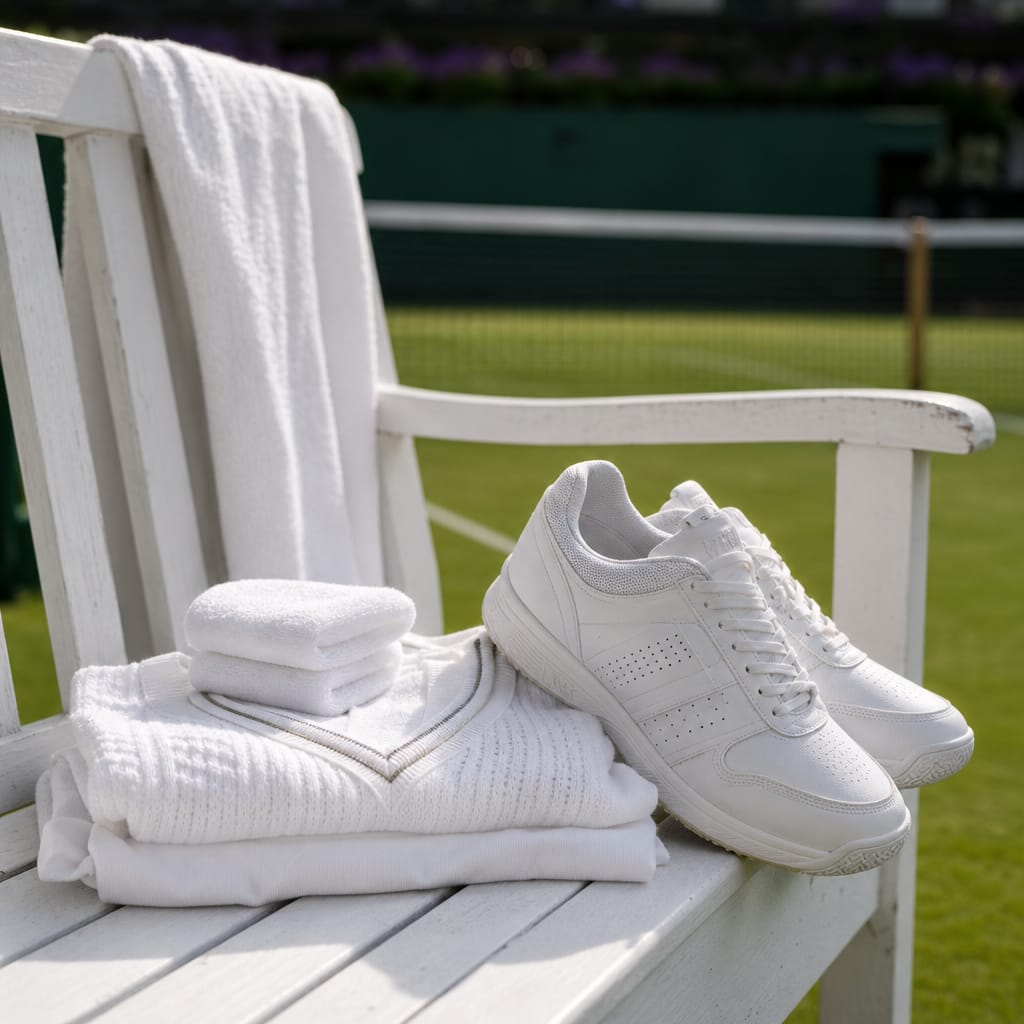
It worked socially, too. White fabric, particularly white linen and cotton, was expensive to keep clean, and wearing it was a quiet advertisement that you had staff, or at least time, to manage the laundry. Tennis was not, in those early decades, a sport for everyone. The whites said so without anyone having to be rude about it.
What the Rules Say (They're Quite Something)
The All England Club's dress code has sharpened over the years into something almost comically specific. The official guidelines specify that white must be "predominantly white", that coloured trim must be no more than one centimetre wide, and that undergarments visible during play must also be white. This is not guidance. This is legislation. Players have been sent back to change, arguments have been had about off-white, and there is a colour somewhere between ivory and magnolia that Wimbledon would rather not see.
A child confronted with this information tends to stare blankly. Which is the correct response.
The Inversion Nobody Really Explains
What's strange, and what the child's confusion accidentally identifies, is that the rule has never really been about the clothing. White at Wimbledon signals belonging – to a particular tradition, a particular image of the sport, a particular sense that this place takes itself seriously in a way that demands you do too. That's why adults iron their whites with a kind of low-grade anxiety that they do not bring to packing for any other sporting event.
The kid asking "but why white?" is really asking who decided tennis should feel like this. The honest answer is: a committee of Victorians who were worried about visible sweat and doing a very good job of keeping out the riff-raff. The dress code outlasted both concerns. That tells you something about how well a rule can survive its own original reasons.
FAQ
Why do players wear white at Wimbledon?
The reason Wimbledon players wear white dates back to the Victorian era when sweat was an aspect of games played on grass that players did not wish to advertise, and thick, tightly woven white fabric hid damp patches better than colours. Also, white cotton or linen was the dress of the affluent and expensive to keep clean.
What are the Wimbledon dress code rules on white?
Players are required by the All England Club to wear predominantly white clothing. The amount of coloured trim allowed is one centimetre or less and any undergarments visible during play must be white. These rules are strictly enforced and there have been instances in which players were forced to change, with off-white shades causing arguments.
Why was white seen as a sign of status in early tennis?
In the early years of tennis, white linen and cotton were expensive to keep clean. Thus, the quiet wear of such costly materials by their owners would indicate that they had servants to look after their washing, or at least the time to do so. Tennis was not for everyone, and the whites signalled that.
Does the Wimbledon white rule still make sense?
The code has outlived its original reasons. The Victorians were keen to stop people of low class joining in and to keep people from sweating visibly in public. Today whites are mainly a part of the code to signify membership of a tradition and an image of a game that takes itself seriously. Adults worry about their whites for these reasons.