New free tool Holiday spending money calculator
Skip to main content
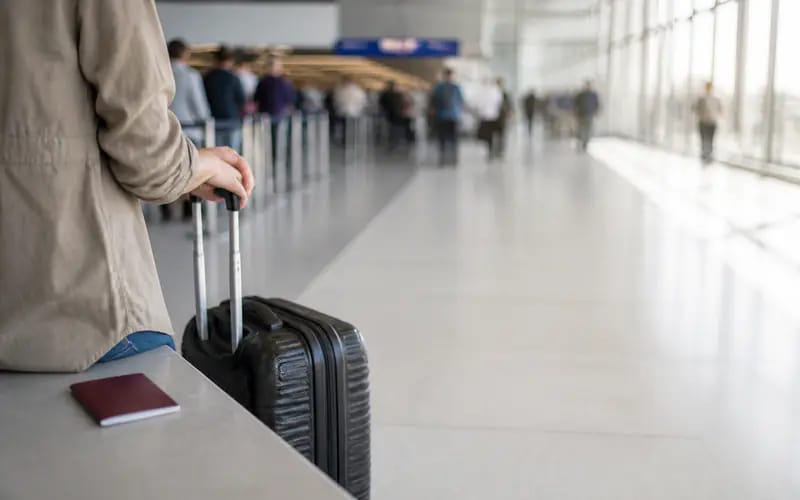
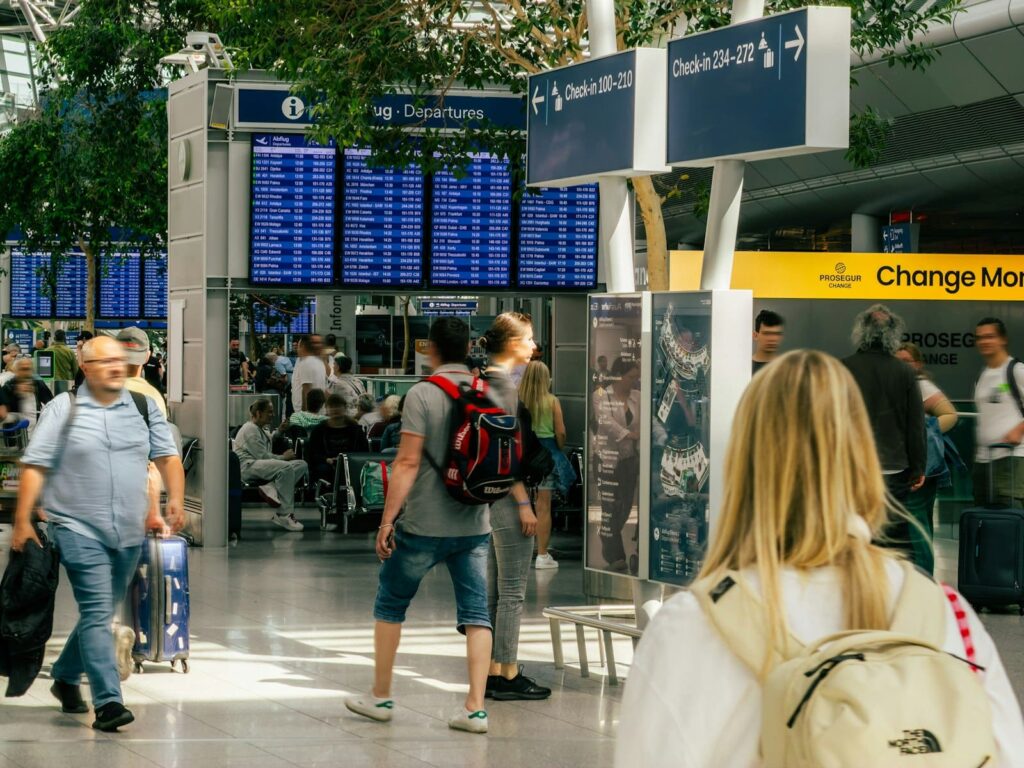
Deaf traveler navigating airport with luggage

The Five Travel Tips That Assume You Can Hear

Tips

Most travel advice is written for the same imaginary person. They breeze through airports on autopilot, catch the gate announcement over the tannoy, and when something goes wrong, they just "ask someone". Perfectly reasonable advice, if your ears work the way the airport expects them to.

But run those same five classic travel tips through the experience of someone who is deaf or hard of hearing, and something interesting happens. They don't just become harder to follow – they fall apart in ways that reveal exactly how much of modern travel infrastructure is built around a single, very specific kind of body.
Deaf traveler navigating airport with luggage — detail

Documentation: The Form That Doesn't Know You Exist

Paperwork for travel is pretty standard: passport, visa, travel insurance, boarding pass. For a deaf traveller, though, it's worth adding something extra – a card, or a note on your phone – that briefly explains your hearing loss in plain language. Not for sympathy. For speed. Security staff, gate agents, and foreign taxi drivers work fast, and having something to point to skips the pantomime of repeated shouting and keeps everyone's dignity intact. Some travellers also carry an audiologist's letter if they're bringing hearing aids through security, since the devices can complicate the screening process.

Budget: The Invisible Extras

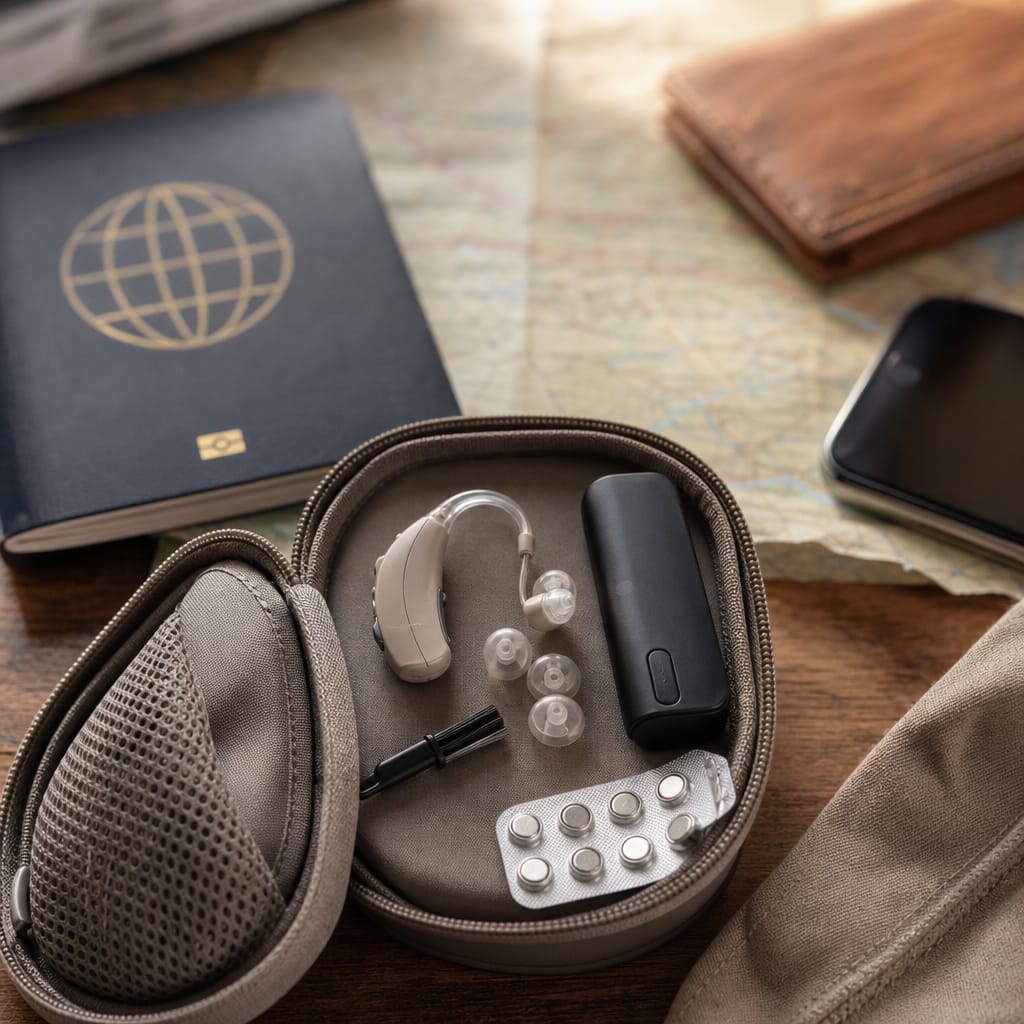
The standard budget conversation covers flights, hotels, food, and a holiday float for impulse gelato. Less discussed: the cost of travel-grade hearing aid accessories. Batteries drain faster in heavy-use environments. Replacement domes, wax guards, and spare tubing take up almost no space but cost money – and finding them in a rural Spanish pharmacy is not a given. Budget a small kit. It earns its weight.

Insurance: The One That Actually Matters

Standard travel insurance is often vague about pre-existing conditions, and hearing loss counts as one. Read the small print specifically around medical equipment. If your hearing aids are lost, damaged, or stolen abroad, will the policy cover them? A mid-range pair runs to £1,500 or more, and that's before you get into anything specialist. Some policies cover them under personal possessions; others don't. Worth the phone call before you travel, not after.

Packing: The Things No Packing List Mentions

The universal packing checklist – adapter, sunscreen, decent walking shoes – doesn't include a vibrating alarm clock, though it probably should. Hotel rooms are legally required to have visual fire alarms in the UK, but abroad that's far less consistent. A small travel shaker alarm that clips to the wrist, or a vibrating pad that goes under the pillow, costs almost nothing and removes an anxiety that hearing travellers simply never have to carry.

Itinerary: Booking the Quiet Version

Tour groups assume you can hear the guide. Audio guides in museums assume the same. Here's the interesting bit: many major museums now offer BSL-interpreted tours, captioned video guides, or written alternatives – but only if you know to ask and book in advance. Building ten minutes of research into your itinerary planning, just checking what each venue actually offers rather than assuming the standard experience covers you, turns out to make a quieter, often better trip. It slows you down in exactly the right way.

Questions this raises

  • What can a deaf traveller arrange with an airline beforehand?
  • How do you get gate changes without hearing announcements?
  • Are airlines required to provide visual alerts?
  • Which insurers cover lost or damaged hearing aids?
Dubai Visa Requirements for UK Visitors
Travel Rights

Dubai Visa Requirements for UK Visitors

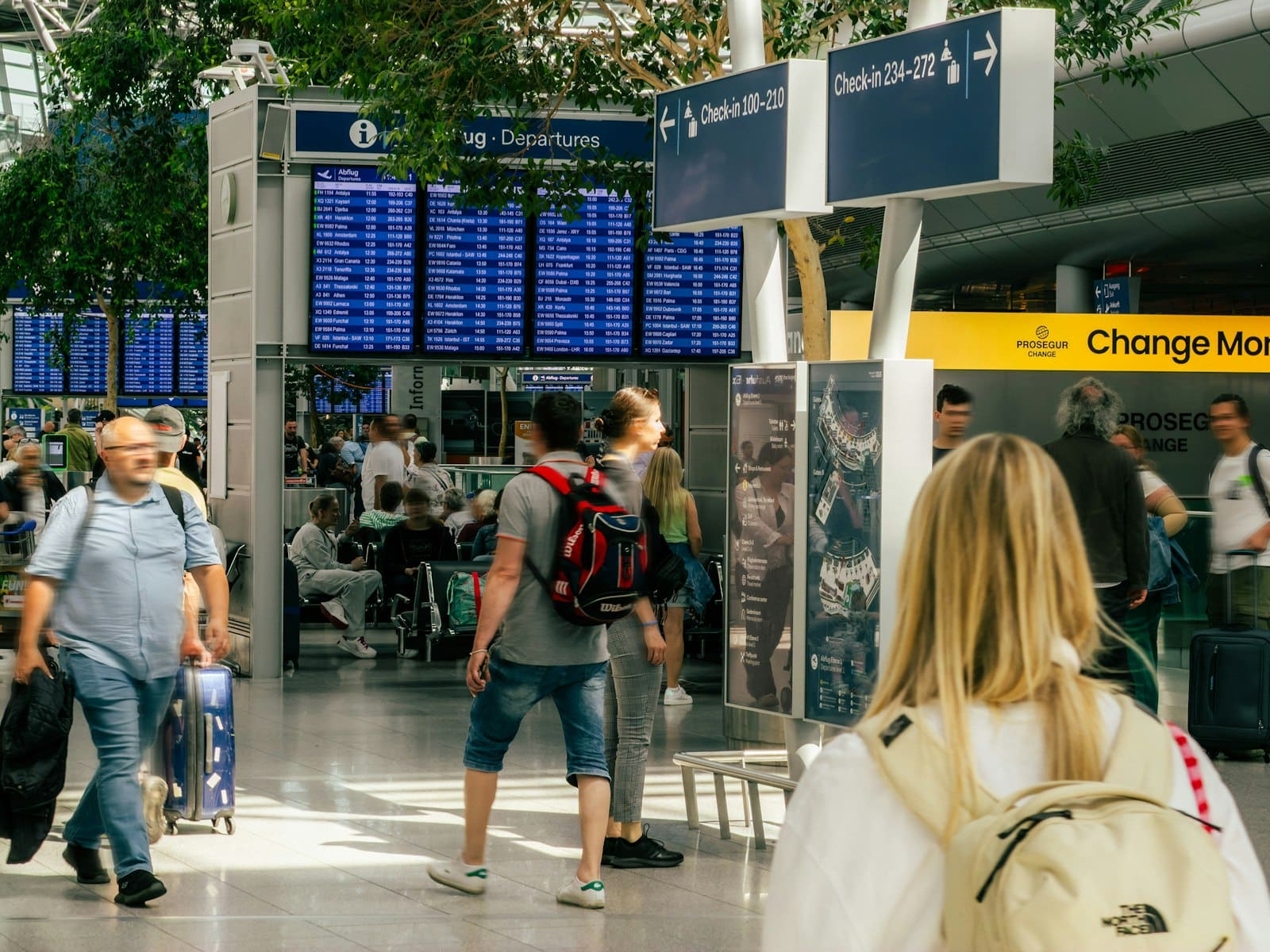
Travellers with backpacks and wheeled suitcases walking past a bank of blue departures screens and check-in signs in a busy airport terminal
Package Holidays, Travel Rights

Package Holiday Regulations Explained: ATOL, ABTA and Your Rights When Things Go Wrong

Vaccinations You'll Need for Thailand
Tips

Vaccinations You’ll Need for Thailand

Getting an Emergency Passport Abroad
Package Holidays

Getting an Emergency Passport Abroad

How to Layer for a Long Haul Flight
Blog

How to Layer for a Long Haul Flight

The Five Travel Tips That Assume You Can Hear

Tips

Most travel advice is written for the same imaginary person. They breeze through airports on autopilot, catch the gate announcement over the tannoy, and when something goes wrong, they just "ask someone". Perfectly reasonable advice, if your ears work the way the airport expects them to.

But run those same five classic travel tips through the experience of someone who is deaf or hard of hearing, and something interesting happens. They don't just become harder to follow – they fall apart in ways that reveal exactly how much of modern travel infrastructure is built around a single, very specific kind of body.

Deaf traveler navigating airport with luggage — detail

Documentation: The Form That Doesn't Know You Exist

Paperwork for travel is pretty standard: passport, visa, travel insurance, boarding pass. For a deaf traveller, though, it's worth adding something extra – a card, or a note on your phone – that briefly explains your hearing loss in plain language. Not for sympathy. For speed. Security staff, gate agents, and foreign taxi drivers work fast, and having something to point to skips the pantomime of repeated shouting and keeps everyone's dignity intact. Some travellers also carry an audiologist's letter if they're bringing hearing aids through security, since the devices can complicate the screening process.

Budget: The Invisible Extras

The standard budget conversation covers flights, hotels, food, and a holiday float for impulse gelato. Less discussed: the cost of travel-grade hearing aid accessories. Batteries drain faster in heavy-use environments. Replacement domes, wax guards, and spare tubing take up almost no space but cost money – and finding them in a rural Spanish pharmacy is not a given. Budget a small kit. It earns its weight.

Insurance: The One That Actually Matters

Standard travel insurance is often vague about pre-existing conditions, and hearing loss counts as one. Read the small print specifically around medical equipment. If your hearing aids are lost, damaged, or stolen abroad, will the policy cover them? A mid-range pair runs to £1,500 or more, and that's before you get into anything specialist. Some policies cover them under personal possessions; others don't. Worth the phone call before you travel, not after.

Packing: The Things No Packing List Mentions

The universal packing checklist – adapter, sunscreen, decent walking shoes – doesn't include a vibrating alarm clock, though it probably should. Hotel rooms are legally required to have visual fire alarms in the UK, but abroad that's far less consistent. A small travel shaker alarm that clips to the wrist, or a vibrating pad that goes under the pillow, costs almost nothing and removes an anxiety that hearing travellers simply never have to carry.

Itinerary: Booking the Quiet Version

Tour groups assume you can hear the guide. Audio guides in museums assume the same. Here's the interesting bit: many major museums now offer BSL-interpreted tours, captioned video guides, or written alternatives – but only if you know to ask and book in advance. Building ten minutes of research into your itinerary planning, just checking what each venue actually offers rather than assuming the standard experience covers you, turns out to make a quieter, often better trip. It slows you down in exactly the right way.

Questions this raises

  • What can a deaf traveller arrange with an airline beforehand?
  • How do you get gate changes without hearing announcements?
  • Are airlines required to provide visual alerts?
  • Which insurers cover lost or damaged hearing aids?
Dubai Visa Requirements for UK Visitors

Dubai Visa Requirements for UK Visitors

Travellers with backpacks and wheeled suitcases walking past a bank of blue departures screens and check-in signs in a busy airport terminal

Package Holiday Regulations Explained: ATOL, ABTA and Your Rights When Things Go Wrong

Vaccinations You'll Need for Thailand

Vaccinations You’ll Need for Thailand

Getting an Emergency Passport Abroad

Getting an Emergency Passport Abroad

How to Layer for a Long Haul Flight

How to Layer for a Long Haul Flight