New free tool Holiday spending money calculator
Skip to main content
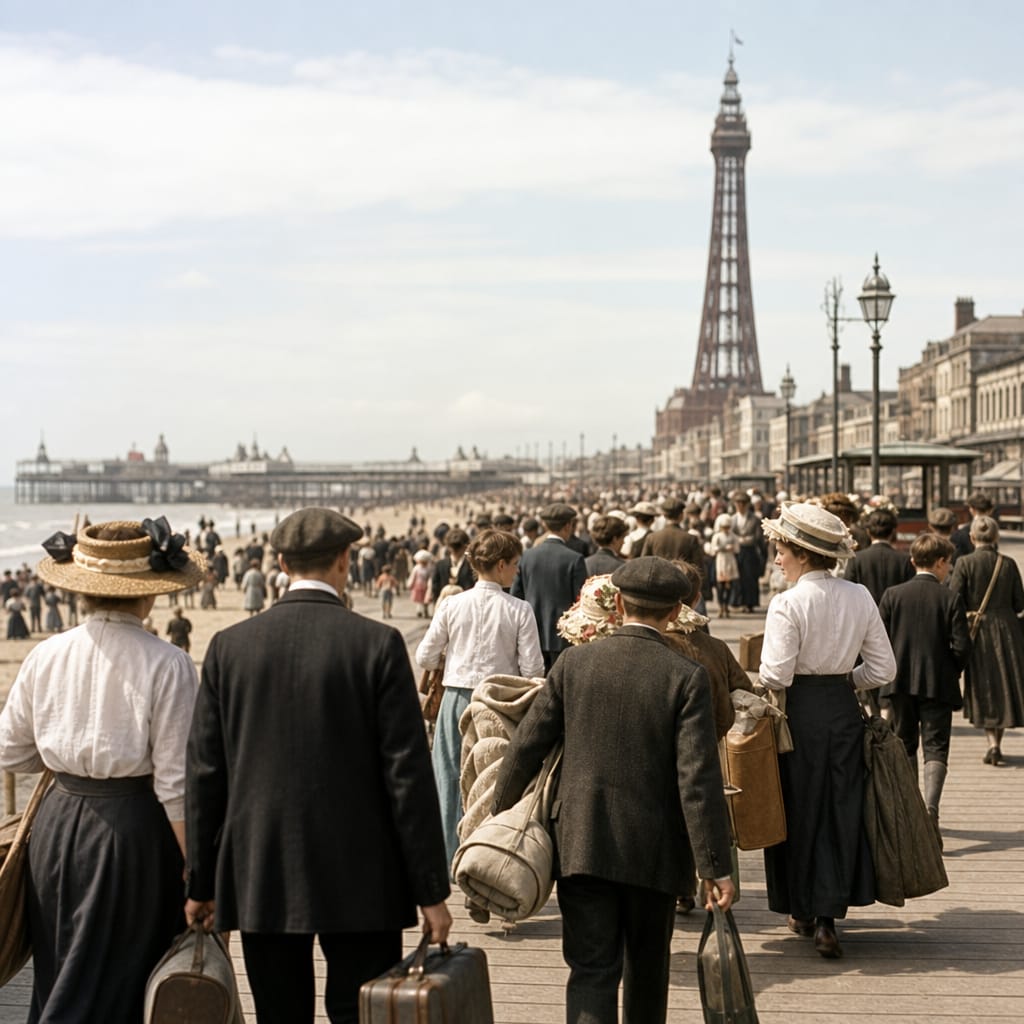
Working-class families enjoying affordable vacation

The Surprisingly Socialist History of the Cheap Holiday

Somewhere in Blackpool, probably around 1908, an entire mill's worth of people arrived on the same train on the same Monday, booked into the same boarding houses, and spent a week eating the same fish suppers within earshot of each other. This wasn't a coincidence. It was infrastructure.

Before budget airlines, before package holidays, before anyone had a credit card or a browser, ordinary British mill workers had figured out something rather clever: if you want something you can't afford alone, you get everyone to want it together.
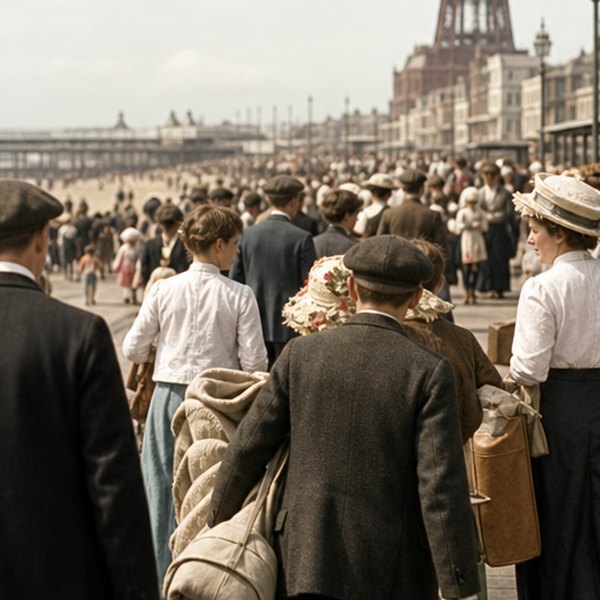
Working-class families enjoying affordable vacation — detail

How did the going-off clubs hold members’ money?

"Wakes weeks" were a feature of industrial England long before anyone thought to romanticise them. A mill town – Rochdale, Burnley, Wigan, take your pick – would simply shut down for a week, all at once. The workers who'd been paying into a communal savings club all year would collect their share and go. The clubs had treasurers. They kept ledgers, and people paid in a shilling a week or whatever they could manage, the pot just sitting there accumulating until the annual migration to the coast.

The genius wasn't just the saving. It was the bulk. Landlords in Blackpool knew the Oldham contingent was arriving the third week of July every single year. They planned for it. They priced for it. And the workers got better terms than any individual could have negotiated, because they weren't arriving as individuals – they were arriving as a bloc.

Thomas Cook Scaled It Up (And Charged Slightly More For the Privilege)

Thomas Cook's early excursions in the 1840s worked on exactly the same logic. Fill a train, split the cost, go somewhere none of you could have afforded separately. His first organised trip – Leicester to Loughborough, 1841, eleven miles, a shilling a head – was basically a wakes week without the factory. The charm of it, the bit his marketing never quite said out loud: cheap travel has always been a collective technology. One person buying one seat has never been the efficient unit. A crowd buying all the seats at once is.

The package holiday, which the 1973 Civil Aviation Act finally gave a proper legal definition in the UK, was really this same idea dressed in polyester and given an airport transfer. The tour operator block-books the flights and the hotel rooms in advance, takes the financial risk on shifting all of it, and passes the saving on. The mill club had a treasurer; TUI has a revenue management team. The maths is the same.

What This Means When You're Booking

The moments when a holiday genuinely gets cheap are still the same moments. A last-minute deal that drops because the operator needs to fill the plane. A group booking that suddenly unlocks a lower rate. Something unsold needs selling, and the price drops to make that happen.

So next time you find yourself refreshing a flight comparison site at midnight looking for the Tuesday departure that's somehow £40 cheaper, you're essentially doing what a cotton-worker in Burnley did with a tin box and a shilling: trying to find your way into someone else's bulk arrangement.

The cheap holiday was never a private discovery. It was always borrowed from a crowd.

Questions this raises

  • What were wakes weeks and when did they end?
  • Why did whole towns take their holidays at once?
  • Did the mill owners support the shutdown weeks?
Dubai Visa Requirements for UK Visitors
Travel Rights

Dubai Visa Requirements for UK Visitors

Travellers with backpacks and wheeled suitcases walking past a bank of blue departures screens and check-in signs in a busy airport terminal
Package Holidays, Travel Rights

Package Holiday Regulations Explained: ATOL, ABTA and Your Rights When Things Go Wrong

Vaccinations You'll Need for Thailand
Tips

Vaccinations You’ll Need for Thailand

Getting an Emergency Passport Abroad
Package Holidays

Getting an Emergency Passport Abroad

How to Layer for a Long Haul Flight
Blog

How to Layer for a Long Haul Flight

The Surprisingly Socialist History of the Cheap Holiday

Somewhere in Blackpool, probably around 1908, an entire mill's worth of people arrived on the same train on the same Monday, booked into the same boarding houses, and spent a week eating the same fish suppers within earshot of each other. This wasn't a coincidence. It was infrastructure.

Before budget airlines, before package holidays, before anyone had a credit card or a browser, ordinary British mill workers had figured out something rather clever: if you want something you can't afford alone, you get everyone to want it together.

Working-class families enjoying affordable vacation — detail

How did the going-off clubs hold members’ money?

"Wakes weeks" were a feature of industrial England long before anyone thought to romanticise them. A mill town – Rochdale, Burnley, Wigan, take your pick – would simply shut down for a week, all at once. The workers who'd been paying into a communal savings club all year would collect their share and go. The clubs had treasurers. They kept ledgers, and people paid in a shilling a week or whatever they could manage, the pot just sitting there accumulating until the annual migration to the coast.

The genius wasn't just the saving. It was the bulk. Landlords in Blackpool knew the Oldham contingent was arriving the third week of July every single year. They planned for it. They priced for it. And the workers got better terms than any individual could have negotiated, because they weren't arriving as individuals – they were arriving as a bloc.

Thomas Cook Scaled It Up (And Charged Slightly More For the Privilege)

Thomas Cook's early excursions in the 1840s worked on exactly the same logic. Fill a train, split the cost, go somewhere none of you could have afforded separately. His first organised trip – Leicester to Loughborough, 1841, eleven miles, a shilling a head – was basically a wakes week without the factory. The charm of it, the bit his marketing never quite said out loud: cheap travel has always been a collective technology. One person buying one seat has never been the efficient unit. A crowd buying all the seats at once is.

The package holiday, which the 1973 Civil Aviation Act finally gave a proper legal definition in the UK, was really this same idea dressed in polyester and given an airport transfer. The tour operator block-books the flights and the hotel rooms in advance, takes the financial risk on shifting all of it, and passes the saving on. The mill club had a treasurer; TUI has a revenue management team. The maths is the same.

What This Means When You're Booking

The moments when a holiday genuinely gets cheap are still the same moments. A last-minute deal that drops because the operator needs to fill the plane. A group booking that suddenly unlocks a lower rate. Something unsold needs selling, and the price drops to make that happen.

So next time you find yourself refreshing a flight comparison site at midnight looking for the Tuesday departure that's somehow £40 cheaper, you're essentially doing what a cotton-worker in Burnley did with a tin box and a shilling: trying to find your way into someone else's bulk arrangement.

The cheap holiday was never a private discovery. It was always borrowed from a crowd.

Questions this raises

  • What were wakes weeks and when did they end?
  • Why did whole towns take their holidays at once?
  • Did the mill owners support the shutdown weeks?

Dubai Visa Requirements for UK Visitors

Dubai Visa Requirements for UK Visitors

Travellers with backpacks and wheeled suitcases walking past a bank of blue departures screens and check-in signs in a busy airport terminal

Package Holiday Regulations Explained: ATOL, ABTA and Your Rights When Things Go Wrong

Vaccinations You'll Need for Thailand

Vaccinations You’ll Need for Thailand

Getting an Emergency Passport Abroad

Getting an Emergency Passport Abroad

How to Layer for a Long Haul Flight

How to Layer for a Long Haul Flight