New free tool Holiday spending money calculator
Skip to main content
Grandmother examining vintage fabric texture closely

What Your Grandmother Knew About Cloth That The Label Doesn’t Tell You

Clothing

There was a time, not so long ago, when buying fabric meant interrogating it. Not with a phone, not with a QR code pointing to a sustainability report – with your hands, your cheek, and occasionally a lit candle. Before care labels existed, before "polyester-cotton blend" was printed in four languages on a tiny rectangle itching at your neck, ordinary people had a whole working system for judging cloth. They'd found weirder ways to answer them, but they were asking exactly the same five questions about clothing that matter right now.

The Cheek Test (What You're Really Asking: Will This Keep Me Warm?)

Hold a piece of fabric flat against your cheekbone for a few seconds. If it warms up with you, it's retaining heat – the fibres have enough loft and density to trap the air your body is heating. If it stays cool and slightly clammy, you'll feel that come November. This is warmth, and it's still the first thing worth knowing. Modern buyers tend to check this by weight, but weight alone lies. A dense synthetic can be heavy and useless against cold. The cheek doesn't lie.
Grandmother examining vintage fabric texture closely

The Thread-Burn (What You're Really Asking: What Is This Actually Made Of?)

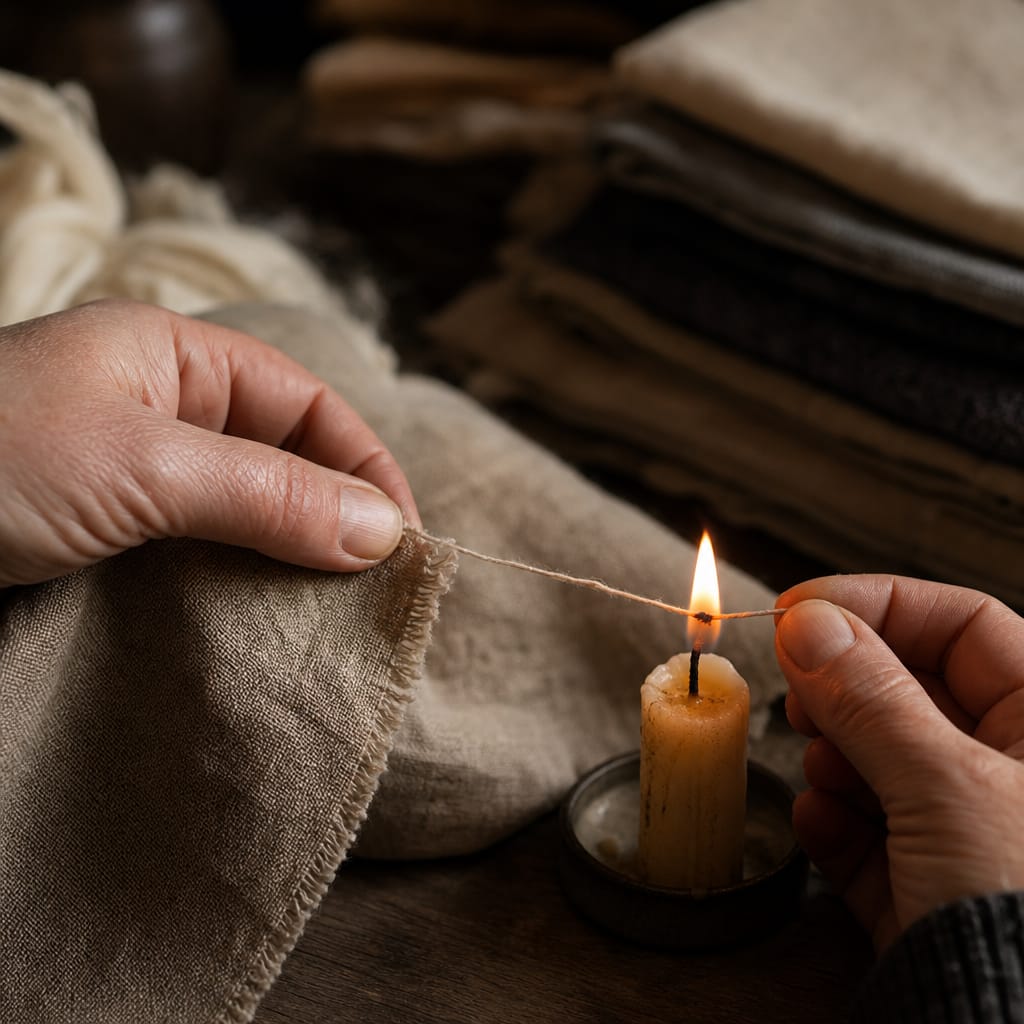
Pull a single thread free and hold it to a flame. Wool smells like singed hair and leaves a crushable ash. Cotton and linen burn clean and leave a soft grey residue. Synthetics melt, bead up, and smell chemical – sometimes alarmingly so. This was the pre-industrial dupe detector. Today the same question is durability and care: natural fibres generally wash more forgivingly, pill less aggressively, and biodegrade rather than shedding microplastics into the water table. The burn test is illegal to perform in a shop, obviously. But reading the fibre content label with the burn test in mind at least tells you what you're holding.

The Window Test (What You're Really Asking: Will I Sweat In This?)

Hold the cloth up to daylight. A close, tight weave shows almost no light through; a loose or open weave glows. The tighter the weave, the more wind-resistant but the less breathable – fine for a coat, wrong for a shirt worn in a warm office. Breathability is still the thing most buyers get wrong. You reach for something that looks light but is actually a sealed synthetic tent.

The Rub Test (What You're Really Asking: Will The Colour Last?)

Wet your finger, press it hard against the fabric, and rub. If colour transfers, the dye isn't fixed properly – it'll fade in the wash, bleed onto other clothes, and look tired within a season. Cheap dye processes haven't changed all that much; this test still works in a changing room.

The Seam Squeeze (What You're Really Asking: Is This Well Built?)

Run a thumbnail along a seam. Does the fabric pucker or the stitching skip? Good construction holds smooth under pressure. A garment can be beautiful and completely fall apart at its joints – the folk rule was simply to pull gently at the corners.

Five questions, five fingertip answers. The labels caught up eventually, but the instincts got there first.

FAQ

How can you tell if fabric is wool, cotton or synthetic?

Pull a single thread and hold it to a flame. Wool smells like burnt hair and produces a crushable ash. Cotton and linen burn cleanly and leave a soft grey residue. Synthetics melt and form beads, smelling of chemicals. Note that you are unable to perform this test in a shop. Read the fibre content label instead.

How do you check if a fabric will keep you warm?

Place the fabric flat against your cheekbone for a few seconds and feel if it warms up with your body. If it does, then the fibres in the fabric have enough loft and a sufficient density to hold air which your body heats up. If it feels cool and slightly damp, then you will feel this in November. Weight of fabric does not necessarily relate to how it will feel against your skin.

How can you test whether a dye will fade or bleed?

Get your finger wet, press it into the fabric and rub. If any colour is transferred then the dye has not fixed into the fabric properly. This will likely fade in washing, bleed onto other clothes and wear poorly within a season or so. You can test this in a changing room to see if a fabric is suitable before you buy it.

How do you know if a fabric will be breathable?

Hold the fabric up to daylight. A tightly woven fabric will let almost no light through. It will be more wind-resistant but not very breathable, and thus suited to outer garments like coats. Loosely woven fabrics allow light to pass through and allow for good airflow; they are better for garments to be worn in warm offices, like dress shirts. Be wary of thin-looking man-made fibres that appear to be sealed up tightly.


Dubai Visa Requirements for UK Visitors
Travel Rights

Dubai Visa Requirements for UK Visitors

Travellers with backpacks and wheeled suitcases walking past a bank of blue departures screens and check-in signs in a busy airport terminal
Package Holidays, Travel Rights

Package Holiday Regulations Explained: ATOL, ABTA and Your Rights When Things Go Wrong

Vaccinations You'll Need for Thailand
Tips

Vaccinations You’ll Need for Thailand

Getting an Emergency Passport Abroad
Package Holidays

Getting an Emergency Passport Abroad

How to Layer for a Long Haul Flight
Blog

How to Layer for a Long Haul Flight

What Your Grandmother Knew About Cloth That The Label Doesn’t Tell You

Clothing

There was a time, not so long ago, when buying fabric meant interrogating it. Not with a phone, not with a QR code pointing to a sustainability report – with your hands, your cheek, and occasionally a lit candle. Before care labels existed, before "polyester-cotton blend" was printed in four languages on a tiny rectangle itching at your neck, ordinary people had a whole working system for judging cloth. They'd found weirder ways to answer them, but they were asking exactly the same five questions about clothing that matter right now.

The Cheek Test (What You're Really Asking: Will This Keep Me Warm?)

Hold a piece of fabric flat against your cheekbone for a few seconds. If it warms up with you, it's retaining heat – the fibres have enough loft and density to trap the air your body is heating. If it stays cool and slightly clammy, you'll feel that come November. This is warmth, and it's still the first thing worth knowing. Modern buyers tend to check this by weight, but weight alone lies. A dense synthetic can be heavy and useless against cold. The cheek doesn't lie.

Grandmother examining vintage fabric texture closely

The Thread-Burn (What You're Really Asking: What Is This Actually Made Of?)

Pull a single thread free and hold it to a flame. Wool smells like singed hair and leaves a crushable ash. Cotton and linen burn clean and leave a soft grey residue. Synthetics melt, bead up, and smell chemical – sometimes alarmingly so. This was the pre-industrial dupe detector. Today the same question is durability and care: natural fibres generally wash more forgivingly, pill less aggressively, and biodegrade rather than shedding microplastics into the water table. The burn test is illegal to perform in a shop, obviously. But reading the fibre content label with the burn test in mind at least tells you what you're holding.

The Window Test (What You're Really Asking: Will I Sweat In This?)

Hold the cloth up to daylight. A close, tight weave shows almost no light through; a loose or open weave glows. The tighter the weave, the more wind-resistant but the less breathable – fine for a coat, wrong for a shirt worn in a warm office. Breathability is still the thing most buyers get wrong. You reach for something that looks light but is actually a sealed synthetic tent.

The Rub Test (What You're Really Asking: Will The Colour Last?)

Wet your finger, press it hard against the fabric, and rub. If colour transfers, the dye isn't fixed properly – it'll fade in the wash, bleed onto other clothes, and look tired within a season. Cheap dye processes haven't changed all that much; this test still works in a changing room.

The Seam Squeeze (What You're Really Asking: Is This Well Built?)

Run a thumbnail along a seam. Does the fabric pucker or the stitching skip? Good construction holds smooth under pressure. A garment can be beautiful and completely fall apart at its joints – the folk rule was simply to pull gently at the corners.

Five questions, five fingertip answers. The labels caught up eventually, but the instincts got there first.

FAQ

How can you tell if fabric is wool, cotton or synthetic?

Pull a single thread and hold it to a flame. Wool smells like burnt hair and produces a crushable ash. Cotton and linen burn cleanly and leave a soft grey residue. Synthetics melt and form beads, smelling of chemicals. Note that you are unable to perform this test in a shop. Read the fibre content label instead.

How do you check if a fabric will keep you warm?

Place the fabric flat against your cheekbone for a few seconds and feel if it warms up with your body. If it does, then the fibres in the fabric have enough loft and a sufficient density to hold air which your body heats up. If it feels cool and slightly damp, then you will feel this in November. Weight of fabric does not necessarily relate to how it will feel against your skin.

How can you test whether a dye will fade or bleed?

Get your finger wet, press it into the fabric and rub. If any colour is transferred then the dye has not fixed into the fabric properly. This will likely fade in washing, bleed onto other clothes and wear poorly within a season or so. You can test this in a changing room to see if a fabric is suitable before you buy it.

How do you know if a fabric will be breathable?

Hold the fabric up to daylight. A tightly woven fabric will let almost no light through. It will be more wind-resistant but not very breathable, and thus suited to outer garments like coats. Loosely woven fabrics allow light to pass through and allow for good airflow; they are better for garments to be worn in warm offices, like dress shirts. Be wary of thin-looking man-made fibres that appear to be sealed up tightly.

Dubai Visa Requirements for UK Visitors

Dubai Visa Requirements for UK Visitors

Travellers with backpacks and wheeled suitcases walking past a bank of blue departures screens and check-in signs in a busy airport terminal

Package Holiday Regulations Explained: ATOL, ABTA and Your Rights When Things Go Wrong

Vaccinations You'll Need for Thailand

Vaccinations You’ll Need for Thailand

Getting an Emergency Passport Abroad

Getting an Emergency Passport Abroad

How to Layer for a Long Haul Flight

How to Layer for a Long Haul Flight