How a Grass Built a Global Industry
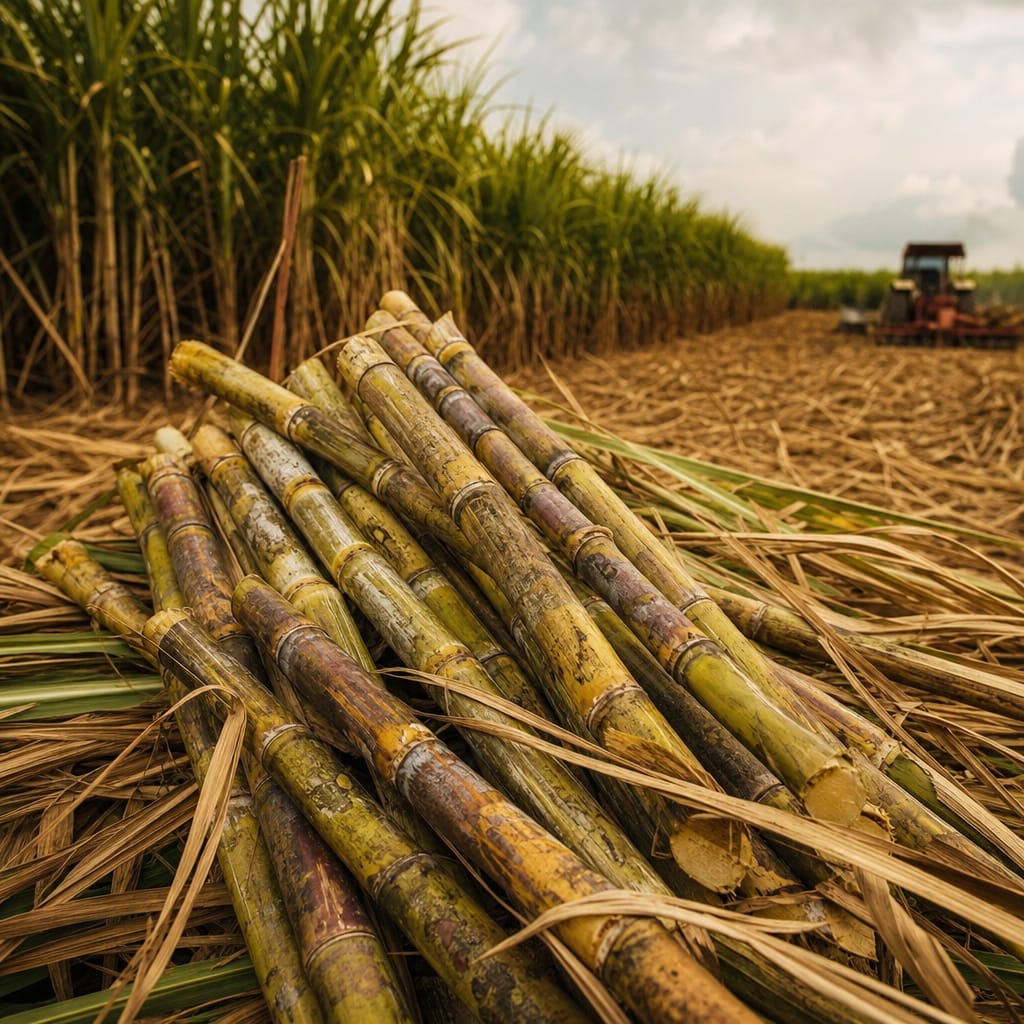
Sugarcane is technically a grass, which feels like the kind of fact that should make it seem humble. It is not humble. Harvesting it is brutal, backbreaking work – the stalks are dense, the leaves are razor-edged, and the whole crop needs cutting in intense heat before it ferments in the field. The people who did this work for the first two centuries of Europe's sugar addiction were enslaved, their labour priced at nothing, the profit extracted entirely upward. That artificially cheap sugar didn't just sweeten things. It funded a culture.
The Coffeehouse That Sugar Built
When sugar arrived in Britain in serious quantities in the 17th century, coffeehouses exploded almost immediately. You needed sugar to make coffee palatable to most people, and suddenly London had over two thousand coffeehouses selling exactly that. These became the rooms where merchants met, where newspapers were read aloud, where ideas moved. They also became the first real model of a service economy: strangers paying strangers to prepare and bring them food and drink, again and again, all day.
The economics of running one of these places were already shaped by the assumption that certain costs – the sugar, the coffee itself – could be kept artificially low because the labour behind them was not honestly priced. And so the wages paid to the people working inside the coffeehouse were also kept low, on the understanding that grateful customers would top them up. The tip was, from the very beginning, a way of making a business model work that would not otherwise quite add up.
How America Borrowed the Gap and Sent It Back
This logic crossed to America and became embedded in a restaurant and hotel industry that also ran, for much of its early history, on dramatically underpaid Black labour. The tip became structurally necessary because the wage was structurally inadequate. American tipping culture then looped back across the Atlantic – absorbed by the British, who had never quite had the same formal tipping habit, through American hotel chains, through globalised restaurant culture, through the card machines that make a 12.5% service charge feel like the path of least resistance.
The Plant Underneath the Prompt
So when the screen tilts toward you and you do a small mental calculation about 12.5% of £47.50, you are standing at the end of a very long chain that starts in a tropical field. A slightly dizzying end, but an end nonetheless. The crop that made coffeehouses possible, the coffeehouses that made service culture possible, the service culture that was built on wages designed never to be enough on their own – it all connects. The sugarcane didn't cause any of this deliberately, obviously. It's a grass. But it was the hinge, and the hinge has never really been oiled.
Press accept. The waiter's probably on £11 an hour.
FAQ
Why did coffeehouses become popular in Britain?
In 17th-century Britain the explosion of coffeehouses was due to the influx of sugar into the country in serious quantities. Most people needed sugar added to the coffee in order to make it drinkable. London was host to over two thousand coffeehouses where merchants would meet, read the papers aloud and spread their ideas.
How is sugar connected to tipping?
Many of the cheap commodities that enabled the coffeehouse to keep its costs low were obtained through underpaid labour. In addition to low-priced sugar and coffee, waiters, barmen and cleaners were paid low wages, on the understanding that their customers would top up their salaries through tipping, which began as a way to make that business model add up.
How did tipping spread from America to Britain?
This form of remuneration followed employees to America, where many restaurants and hotels relied on the underpaid labour of Black workers for very low wages. Employees in these services in America were paid structurally inadequate wages, and American tipping culture took the concept back across the Atlantic for use in hotel chains and in restaurants that were part of a globalised system of service. This was facilitated by card machines that make a 12.5% service charge feel easy.
Why does sugarcane harvesting matter to the history of tipping?
The article describes how sugarcane harvesting, brutal work done in intense heat by enslaved people who were paid nothing for their labour, created an artificially cheap sugar which in turn funded the early coffeehouse culture that became the first real service economy. Sugarcane is described as the ‘hinge’ of a long chain of events which culminates with the card machine.